How to Test Hair Porosity at Home
If you want to improve your hair care routine, one of the most valuable things you can do is test hair porosity. Your hair’s porosity refers to its ability to absorb and retain moisture. Knowing your hair’s porosity level can help you choose the right products, styling techniques, and treatments. Whether you have curls, waves, or straight strands, understanding this aspect of your hair can make a noticeable difference in how it looks and feels.
A Quick Look at What You’ll Learn
Before diving deeper, here’s a quick overview of what we’ll cover in this article.
- What hair porosity is and why it matters for healthy, manageable hair
- Simple methods to test hair porosity at home using everyday items
- How to interpret your results and identify low, medium, or high porosity
- Practical hair care tips tailored to your porosity level
By the end, you’ll know exactly how to find your hair’s porosity and how to use that knowledge to improve your hair health.
Understanding the Concept of Hair Porosity
Hair porosity refers to how well your hair can absorb and hold moisture. This is determined by the condition of your hair cuticle, which is the outermost layer of each strand. The cuticle consists of tiny overlapping scales. When these scales are flat and tight, your hair tends to resist absorbing moisture, which is known as low porosity. When they are more open, your hair absorbs and loses moisture quickly, which is considered high porosity.
Genetics can influence your porosity, but so can factors like chemical treatments, heat styling, and environmental exposure. For example, someone who regularly bleaches or colors their hair may have more open cuticles, leading to high porosity. On the other hand, a person with virgin hair that has never been chemically treated might have low porosity.
The reason porosity matters is that it helps you choose the right products and methods to keep your hair balanced. Without this knowledge, you might end up using products that either do nothing for your hair or make it harder to manage.
Why Learning to Test Hair Porosity Can Change Your Hair Routine
Testing your hair porosity at home can be a game-changer. Imagine constantly buying conditioners that promise deep hydration, only to see minimal improvement. If your hair has low porosity, those products might be sitting on the surface instead of penetrating the hair shaft. Conversely, if you have high porosity hair, moisture might be escaping too quickly, leaving your hair dry soon after washing.
Knowing your porosity allows you to match your routine with your hair’s needs. For instance, people with low porosity may benefit from lighter, water-based products, while those with high porosity often do better with heavier creams and oils to lock in moisture.
Think of it like adjusting a recipe. The ingredients (products) might be great, but if you don’t know how much your hair can actually absorb, you won’t get the result you want.
Common Methods to Test Hair Porosity at Home
There are several easy ways to test hair porosity without professional tools. You can use items you likely already have at home, such as a glass of water or a spray bottle. Each method can give you clues about your hair’s ability to absorb moisture.
The Float Test
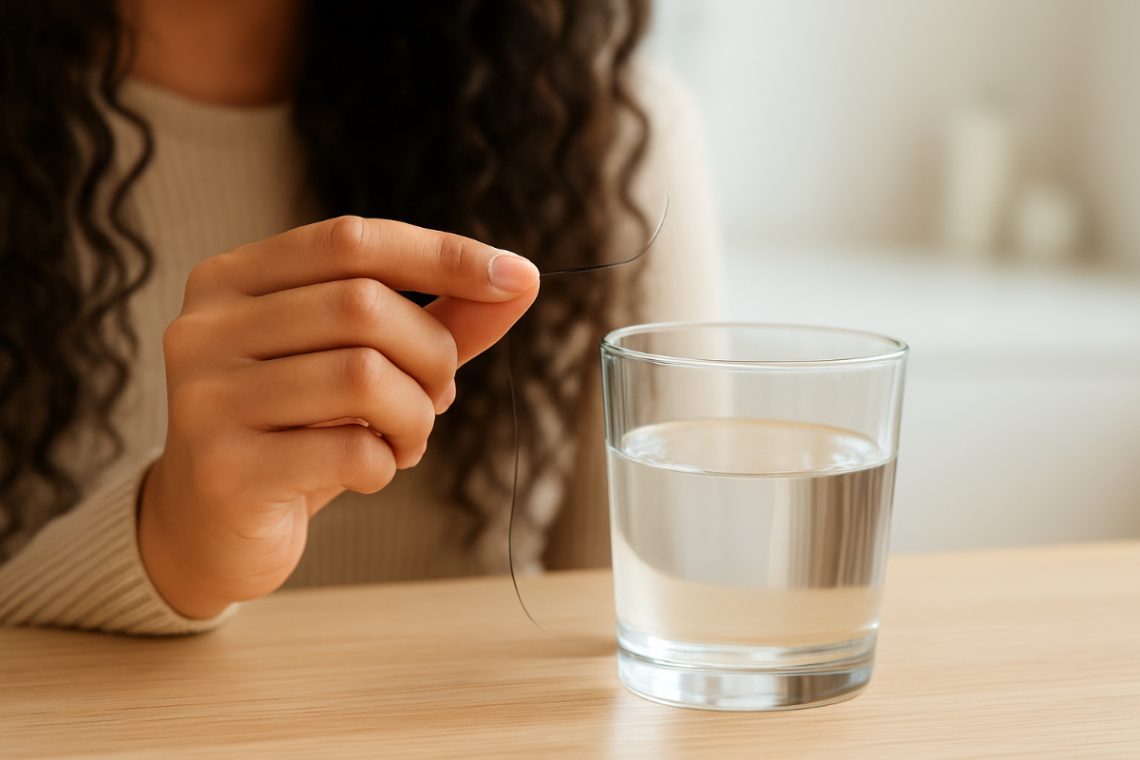
This is one of the simplest ways to check porosity. Take a few clean, product-free strands of hair from your comb or brush and drop them into a glass of room-temperature water. Let them sit for about 2 to 4 minutes. If the strands sink quickly, your hair likely has high porosity. If they float for a while before sinking, you may have medium porosity. If they remain on the surface, your hair may have low porosity.
The float test works best with hair that is completely free of oils, conditioners, or styling products, as these can affect the results. It’s also a good idea to repeat the test with a few strands from different areas of your head to get a more accurate reading.
The Slip-and-Slide Test
Another way to test is by taking a single strand of clean, dry hair and gently sliding your fingers from the tip toward the root. If your fingers move smoothly, your hair cuticle is likely flat and tight, indicating low porosity. If you feel bumps or unevenness, this can be a sign of raised cuticles, which is common in high porosity hair.
This method is quick and doesn’t require any tools, making it ideal if you’re short on time or don’t have access to a glass of water. However, it’s best used as a supplementary test alongside other methods for more reliable results.
The Spray Bottle Test
Spray a small section of your hair with water and observe how it reacts. If the water beads up and sits on the surface, your hair may have low porosity. If it absorbs quickly, you likely have high porosity. Medium porosity hair typically shows a balance, with water absorbing steadily but not too fast.
The spray bottle test mimics how your hair responds to moisture in real-life situations, such as humidity or misting products. This makes it a practical method to see how your hair behaves day-to-day.
Understanding Your Hair Porosity Test Results
After you test hair porosity, the next step is interpreting what it means for your hair care. Low porosity hair tends to repel moisture, so you may need to use heat or steam to help products penetrate. Medium porosity hair is often the easiest to manage, holding moisture well while still allowing hydration to enter. High porosity hair absorbs quickly but loses moisture just as fast, which can lead to dryness and frizz.
Your results can also help you decide on styling techniques. For instance, high porosity hair might benefit from sealing products after moisturizing, while low porosity hair might prefer lighter leave-ins that won’t weigh it down.
Over time, porosity can change, especially with chemical treatments or frequent heat styling. Retesting every few months can help you adjust your routine as needed.
Hair Care Tips Based on Porosity Levels
Once you understand your porosity, you can create a care plan that works for your specific needs. For low porosity hair, use lightweight, water-based products and consider using heat caps or steam treatments to open the cuticle. Medium porosity hair generally responds well to balanced moisture and protein treatments. High porosity hair often needs heavier creams, oils, and regular deep conditioning to lock in hydration.
An example of this in action could be two friends using the same leave-in conditioner. One has low porosity hair and finds the product makes her hair feel greasy. The other has high porosity hair and says it absorbs instantly. This difference comes down to how each person’s hair cuticle interacts with the product.
It’s also worth noting that porosity can vary across your head. You might have low porosity at the crown and high porosity at the ends, especially if the ends have been exposed to more damage over time. Adjusting your product application to suit these variations can yield better results.
Bringing It All Together for Healthier Hair
Learning how to test hair porosity at home is more than just a fun experiment. It’s a practical way to understand your hair’s unique needs and make more informed choices about products and techniques. By identifying whether your hair is low, medium, or high porosity, you can build a personalized care routine that improves moisture retention, reduces breakage, and keeps your hair looking its best.
The process is simple, and the results can help you stop guessing and start caring for your hair in a way that truly works. Your hair will thank you for the attention, and over time, you’ll notice healthier, more manageable strands that respond well to your efforts.

You May Also Like

How Hair Growth Oils Work and the Best Way to Apply Them
What is a Hair Detox