PRP Hair Treatment: Benefits, Cost and Results
Hair loss can feel stressful, but there are modern options that can help you take control of your scalp health. Platelet rich plasma, or PRP, is one of the most talked about non surgical treatments for thinning hair. At Toni & Guy Hong Kong we explore the science behind PRP, what you can expect from the procedure, and how it fits into a broader hair care routine. If you are curious about regenerating your scalp with your body own resources, PRP could be worth exploring with a qualified medical professional.
What is PRP Hair Treatment?
Platelet rich plasma is a concentrate of platelets drawn from your own blood. Platelets are packed with growth factors that can stimulate healing and tissue regeneration. For hair treatment, a clinician draws a small amount of your blood, processes it in a centrifuge to concentrate the platelets, and then injects this PRP into the scalp in targeted areas.
The science behind PRP
- Platelets release growth factors that may signal the hair follicles to stay in the growth phase.
- The scalp benefits from improved blood supply and potential support for hair follicle health.
- PRP is autologous, meaning it comes from your own body, which reduces the risk of allergic reactions.
PRP and hair growth
- Some people notice a noticeable improvement in hair density and thickness after several sessions.
- PRP is often used for androgenetic alopecia, thinning at the crown, and to support hair transplant healing.
- Results vary by person, and PRP works best as part of an overall hair care plan.
Am I a good candidate for PRP hair treatment?
Not everyone is an ideal candidate. In general, desirable candidates include:
– Adults with early to moderate hair thinning or shedding
– Stable medical conditions without active infections of the scalp
– No history of blood clotting disorders that would contraindicate injections
– Those who prefer non surgical options or who want to complement other treatments
Your clinician will evaluate your medical history, scalp condition, and hair loss pattern to determine if PRP is right for you. It is important to have realistic expectations and understand that PRP is not a guaranteed cure for advanced hair loss.
PRP Treatment Process
Understanding the process helps reduce surprises and set you up for success.
Step 1: Consultation and assessment
- A clinician reviews your medical history and photos your scalp to map thinning areas.
- They discuss goals, potential benefits, and how many sessions may be needed.
- A patch test or scalp assessment may be performed to ensure safety.
Step 2: Blood draw and PRP preparation
- A small amount of blood is drawn and placed in a centrifuge to separate plasma rich in platelets from other blood components.
- The PRP is collected and prepared for injection. Some clinics combine PRP with microneedling to enhance absorption.
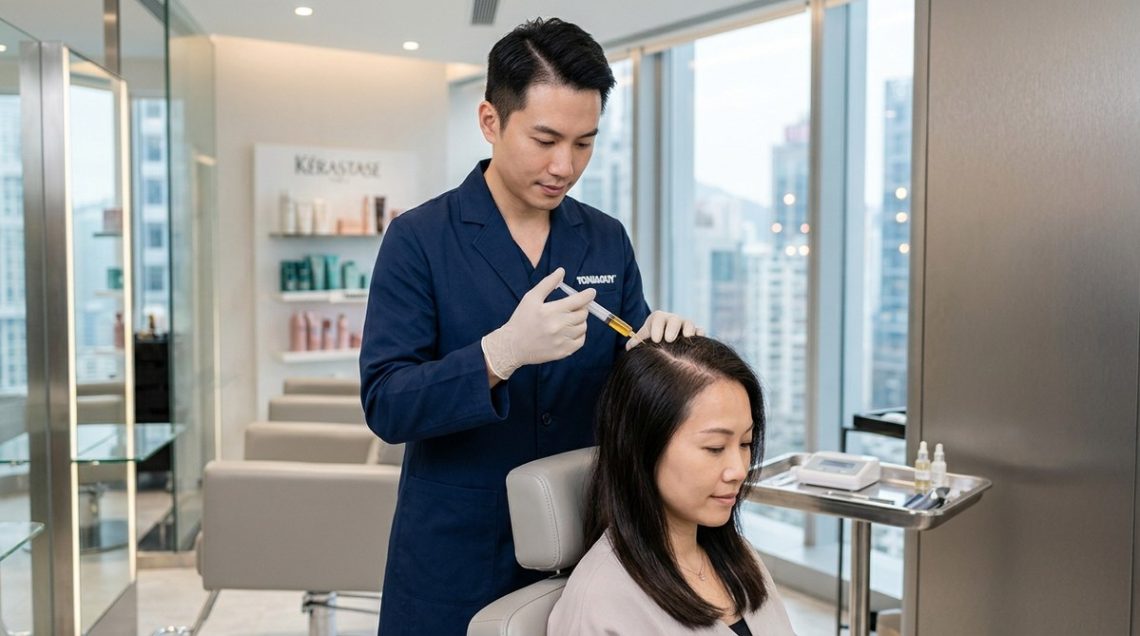
Step 3: Injections into the scalp
- PRP is injected into thinning areas of the scalp with very fine needles.
- The procedure typically takes between 30 to 60 minutes, depending on the treated areas.
Step 4: Aftercare and appointments
- You may experience mild soreness or tenderness for a day or two.
- Most clinicians recommend avoiding intense exercise for 24 to 48 hours after treatment.
- A series of sessions is generally advised for best results.
How many sessions are needed and how often
- A common plan includes 3 to 4 sessions, spaced about 4 to 6 weeks apart.
- Some patients benefit from ongoing maintenance treatments every 6 to 12 months.
- Your clinician will tailor a plan based on hair loss pattern, response to treatment, and goals.
Benefits and what to expect from PRP hair treatment
- Potential increase in hair density and thickness
- Improved hair shaft caliber and scalp health
- Adaptable to other hair restoration strategies such as combined therapies
- Minimal downtime with most people returning to regular activities quickly
Realistic expectations
- PRP is not a miracle cure for advanced balding.
- Visible improvements may take several months as hair cycles through growth phases.
- A good candidate may see gradual improvement rather than overnight results.
Safety, risks and side effects
- PRP uses your own blood so the risk of allergic reaction is very low.
- Possible side effects include mild scalp tenderness, redness, swelling, or a short-lived headache.
- In rare cases, there could be infection or injection site complications. Choosing a qualified medical professional minimizes risk.
Cost considerations and budgeting
Pricing for PRP hair treatment varies widely by clinic, location, and protocol. In Hong Kong, you may see price ranges that resemble:
– Per session costs commonly in the HKD range of a few thousand dollars
– Package deals for multiple sessions (3 to 4 sessions) with a bundled price
– Additional costs if combining PRP with microneedling or other technologies
Tips to plan your budget:
– Check what is included in the price (PRP preparation kit, clinician time, follow up)
– Ask about potential discounts for a package of sessions
– Confirm if aftercare products or scalp care recommendations are included
– Consider a phased plan that aligns with your goals and timeline
PRP versus other hair restoration options
- Medications: Oral or topical treatments can complement PRP but may have systemic side effects.
- Hair transplant: Surgical option for more advanced balding; PRP can be used to support healing and growth around a transplant site.
- Low level laser therapy: Non surgical option that some patients pair with PRP.
- Scalp microneedling: Often used in combination with PRP to improve absorption and stimulate follicles.
Choosing between options
- Early stage thinning often responds well to PRP or a combination of PRP and microneedling.
- More advanced hair loss may require surgical or pharmacologic approaches in addition to PRP.
- A personalized plan is best created with a medical professional who specializes in hair restoration.
How PRP fits into a broader hair care plan
PRP is most effective when paired with a holistic hair care routine. Consider:
– Gentle cleansing and scalp massage to improve circulation
– Proteins and nutrients that support hair health
– Scalp care strategies that protect the skin microbiome
– Avoiding aggressive chemical treatments that stress the scalp
– Maintaining a healthy lifestyle with adequate sleep and hydration
Related topics to explore on Toni & Guy Hong Kong:
– Scalp micro needling and PRP synergy
– Porosity testing to tailor conditioning routines
– Microbiomes and scalp health for longer lasting results
– Hair detox routines to support a healthy environment for new growth
What to look for when selecting a PRP provider
- Medical background and specialization in hair restoration
- Clear, transparent pricing and treatment plan
- Evidence based approach and realistic expectations
- Sterile technique and adherence to safety protocols
- Patient reviews, before and after photos, and a clear aftercare plan
Real world results: what patients report
- Many patients report improvements in hair density and scalp condition after a course of PRP treatments.
- Some individuals see noticeable hair shaft thickening and less shedding.
- Individual experiences vary based on age, degree of hair loss, and response to treatment.
Frequently asked questions
Is PRP a permanent solution for hair loss?
PRP can slow hair thinning and improve follicle function, but it is not a permanent cure. Maintenance sessions may be needed over time.
How long do PRP results last?
Results typically become more evident over several months after the initial sessions and can last about 12 to 18 months for some individuals. Ongoing maintenance can help sustain improvements.
Are there risks with PRP injections?
Risks are generally mild and limited to the injection area, such as temporary soreness, redness, or swelling. Infection is rare when performed by a trained clinician.
Can PRP be used with hair transplants?
Yes, PRP is commonly used to support healing after transplantation and to encourage faster hair growth around transplanted sites.
How should I prepare for PRP treatment?
Discuss medications with your clinician, avoid blood thinners if advised, and follow pre appointment instructions. Hydration and a good night sleep help with the process.
Planning your PRP journey with Toni & Guy Hong Kong
If you are considering PRP as part of your hair care routine, consult a qualified medical professional who specializes in hair restoration. While Toni & Guy Hong Kong focuses on haircare guidance and styling, understanding PRP helps you have informed conversations with dermatologists and trichologists about options that fit your goals. A solid plan often includes a combination of professional treatments, at home care, and lifestyle choices that support scalp health.
Additional resources you might find helpful
- How microneedling can complement PRP for scalp health
- Porosity testing and how it informs conditioning routines
- Microbiome friendly scalp care and its impact on hair wellness
- Non surgical hair detox steps for a balanced scalp environment
If you would like a personalized guide, our team at Toni & Guy Hong Kong can help you navigate caring for thinning hair and choosing complementary styling strategies while you explore medical options with qualified professionals. Remember that every head of hair is unique, and the right plan respects your scalp’s sensitivity, your goals, and your comfort level.
By staying informed and working with trusted clinicians, you can approach PRP with confidence and a clear sense of what to expect. Whether you are just starting to notice thinning or you are looking to optimize your existing hair care routine, PRP is one option among several effective tools for sustaining a healthy, vibrant head of hair.

You May Also Like
How Often You Should Use a Hair Mask
Hair Detox Guide: When and How to Reset Your Scalp